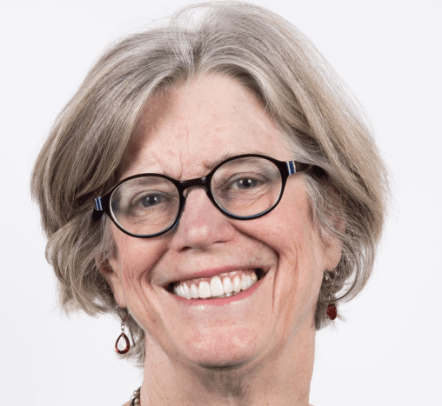
“Articulate,” a thoughtful new memoir about deafness, explores the meaning of “voice.” For the author that means much more than learning to speak. This review was first published in The Washington Post.
**
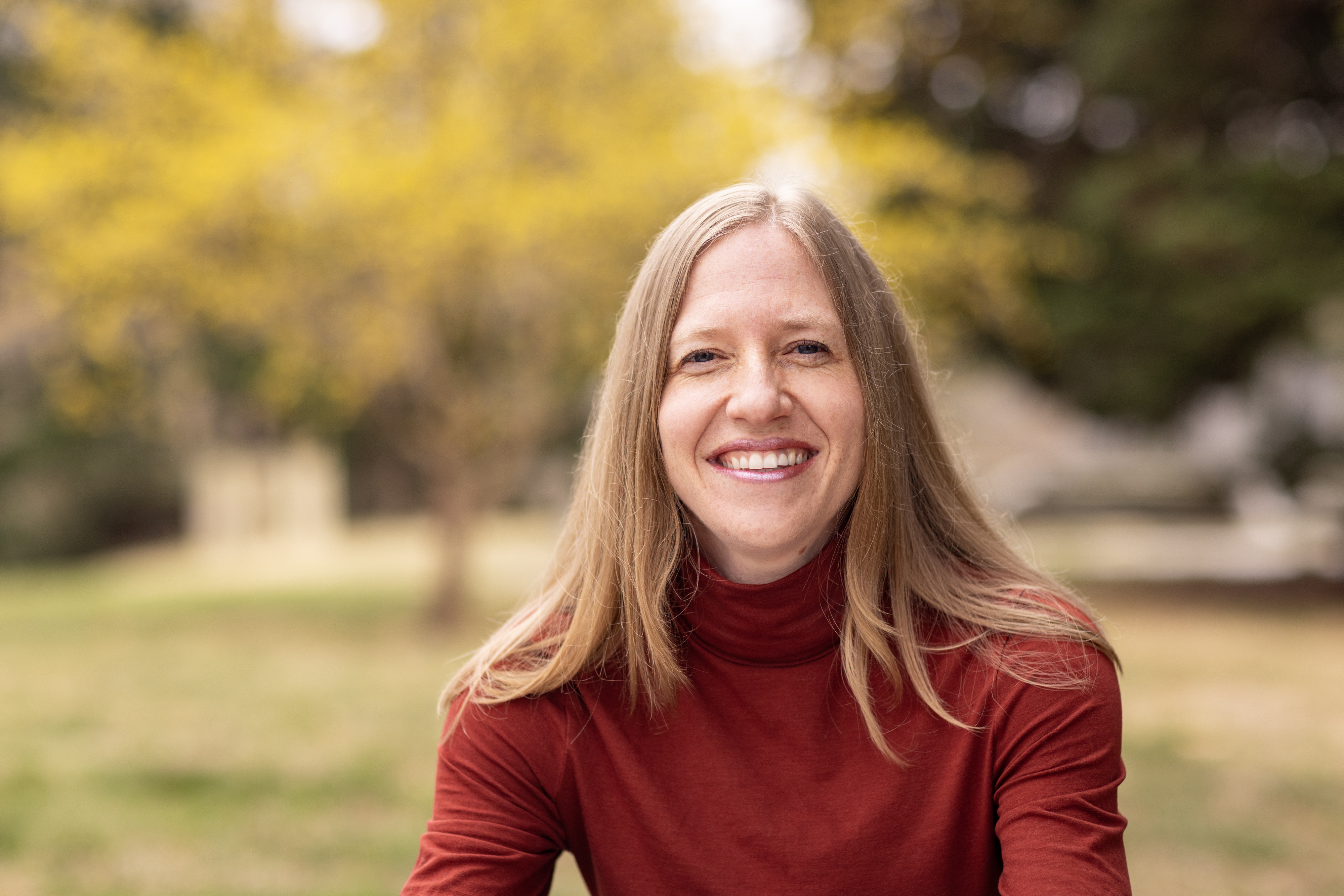
Like Rachel Kolb, I am deaf, losing my hearing in a series of rude jolts over several decades beginning in my early 30s. Like many with progressive hearing loss, each decline was a surprise. I always thought my hearing had reached rock bottom, and so I never learned to sign. Rachel Kolb, author of the memoir “Articulate,” is also deaf, but we come from opposite perspectives on the experience: Where I feel loss, she focuses on gain.
The most remarkable thing about Kolb’s thoughtful, beautifully written memoir about growing up deaf is that the word “loss” is rarely if ever used. Kolb doesn’t miss birdsong or her mother’s voice or the rustle of taffeta in a party dress. Her deafness challenges her ability to hear and understand the spoken word, but the more significant challenge for her is the ability to communicate.
Kolb’s book opens with a look back at a 2013 TEDx Talk she gave at Stanford. She had just graduated from the school, and her 15-minute speech, “Navigating Deafness in a Hearing World,” delves into the challenges she faced, her guides and mentors, her family. It’s by turn reflective and funny, honest about obstacles, indignant at the sometimes-harsh criticism directed at her. After a presentation in middle school, she recalls, a teacher said to her: “You should never speak like that again in front of a group without an interpreter. It’s not fair to the people who have to listen to you.” The TEDx Talk, which has gotten more than 400,000 views, was the culmination of years of intensive speech therapy. “Articulate” is a meditation on what it means to have a voice, and what it meant to Kolb to find her own.
Kolb’s voice is not the polished speech of her TEDx Talk, not the fluency that most people seem to regard as her greatest accomplishment — the “speech centric” perspective. Rather, it is an accumulation of all the means of communication she’s learned over the years: “I sign, write, speak, gesture, fingerspell, sim-com, type, text, tap, stomp, wave, point, use computers and screens and apps, collaborate with interpreters and friends and strangers.”
“Articulate” keeps the focus on voice, with some personal and deaf-related history woven in. I wondered about her love life and at the same time admired her reserve. I paused at a few of her statements: You can’t speak and sign at the same time, Kolb writes, adding, “Would it be possible to speak French and English at the same time?” Technically no, but there’s Franglais. Her description of sign as “inherently three-dimensional … inseparable from space and time” is beautiful but left me a little puzzled. Her discussion of interpreters and the nuances of ASL is fascinating.
Smart and persistent, she is a Rhodes scholar with a PhD in English literature. But she was also lucky. Lucky in being in the first generation born after the passage of the Americans With Disabilities Act in 1990. Thanks to the ADA, Kolb knew how to ask for accommodations, and institutions for the most part knew how to provide them.
She was perhaps even more lucky in having enlightened, supportive parents, who helped facilitate her choices rather than make them for her. They never consigned her to what she calls “the slow damnation of reduced expectations,” as so many deaf children are. After Kolb was diagnosed with hearing loss at six months, her parents started American Sign Language classes for her and for themselves. They got her hearing aids but held off on the decision about a cochlear implant until she was old enough to make it herself. (She does get one.) They had the financial resources to ensure a superb education, starting with private school in the sixth grade. Thanks also in part to the ADA, this school and others began working with Kolb and her parents as soon as she was accepted, to provide all she needed for her education. Parents and teachers recognized her writing ability early and nurtured it. She credits her voracious reading with helping her learn oral speech.
Even as a child, Rachel was determined to speak for herself. She chafed at people asking her younger sister to hear and speak for her. Later, at a summer camp for Deaf/ASL-using children, she discovered Deaf Culture, the capital D signifying ASL users who regard themselves as a community. “Do you consider yourself Deaf?” a fellow camper asked her. “I don’t know,” she replied. “Yeah, I guess so.” Camp exposed her to the Deaf world and revealed an ambiguity about who she was: “Too deaf to be hearing, too hearing to be Deaf.” Slowly she started calling herself Deaf with a capital D sometimes, lowercase deaf at others. “I saw how much I identified with that little indeterminate slash in the middle — the line that ostensibly split d/Deaf people from each other.”
Much of what Kolb describes about her early years before she became part of the signing Deaf community was sadly familiar to me. She is a master sketch artist, creating in a few paragraphs scenes that bring a frustrating or uncomfortable — or triumphant — event to life. Kolb describes a common hearing test where you sit in a soundproof audiologist’s booth and raise your hand when you hear a tone. Reading it put me right back in that booth. “Was I raising my hand because I’d imagined something,” Kolb writes, “or because I’d willed it to exist?” Many of us with hearing loss will recognize “dinner table syndrome”: “the awful claustrophobia of sitting among a rollicking jovial group of hearing people who do not know ASL, and who do not know that it is a problem that they do not know ASL.” About “listening fatigue”: “I could compel my brain to lip-read for only about two hours at a time,” she writes. Mine too, and that goes for reading captions as well.
Kolb talks about the guilt she felt as a teenager when her speech was hard to follow: She saw it as her responsibility, that she needed to remove the “burden” from her listener. I can relate to that. How many times have I said “I’m sorry” when I’ve asked someone to repeat themselves — as if the burden was on me to hear better.
This book is likely to be embraced by both the Deaf and Hard of Hearing communities. But anyone with a love of language can appreciate Kolb’s thoughts on the nature of language and its many iterations as “voice.” For my part, it made me realize how narrow my own view of deafness is.
Articulate
A Deaf Memoir of Voice
By Rachel Kolb
Ecco. 304 pp. $29.99
Also recently published is The Quiet Ear, by Raymond Antrobus, Hogarth Press. 109 pp. $29.00.
For more about hearing loss and hearing help, read my books SHOUTING WON’T HELP and SMART HEARING, available as paperback or ebook at Amazon.
Discover more from Katherine Bouton: Smart Hearing
Subscribe to get the latest posts sent to your email.

 Katherine Bouton: Smart Hearing
[heart] Menton, Carol (MCD) reacted to your message:
LikeLike
Katherine, what an articulate and candid review. I was very moved reading it. When someone asks the girl if she considers herself deaf and she answers “I guess so,” I imagined being that age and feeling that she senses she is lacking. I’ve put it badly, but what I mean is that your review was strikingly evocative.
LikeLiked by 1 person
I thought that moment was very moving, as are lots of things in this book. I couldn’t do justice to them all.
LikeLike
I left a comment in the comment section, but wasn’t able to give my name. Mine is the one about being asked if she thinks she is deaf. I loved your review.
>
LikeLike
Your name wasn’t it on it but something was — dolphininner2d20352e69. Doesn’t look like an email address though.
LikeLike
It is a similar experience but she grew up at a time where there was advanced technology and better education which I did not have, unfortunately. It is what it is…am just blessed that I am able to function and accept that I cannot hear without the hearing aids (totally deaf)
Thanks for sharing the piece about her.
Have you read the book?
LikeLike
Thanks for reading and commenting.
I’ve read the book – I wouldn’t presume to review it if I hadn’t. It’s excellent.
But if you hear well with hearing aids, it sounds like you have taken full advantage of technology. And you’re lucky that hearing aids work well for you, especially with what seems to be the severity of your loss. Mine is similar — and even with the best technology, I still have trouble hearing – more accurately, I have trouble understanding — speech in certain situations.
LikeLike