
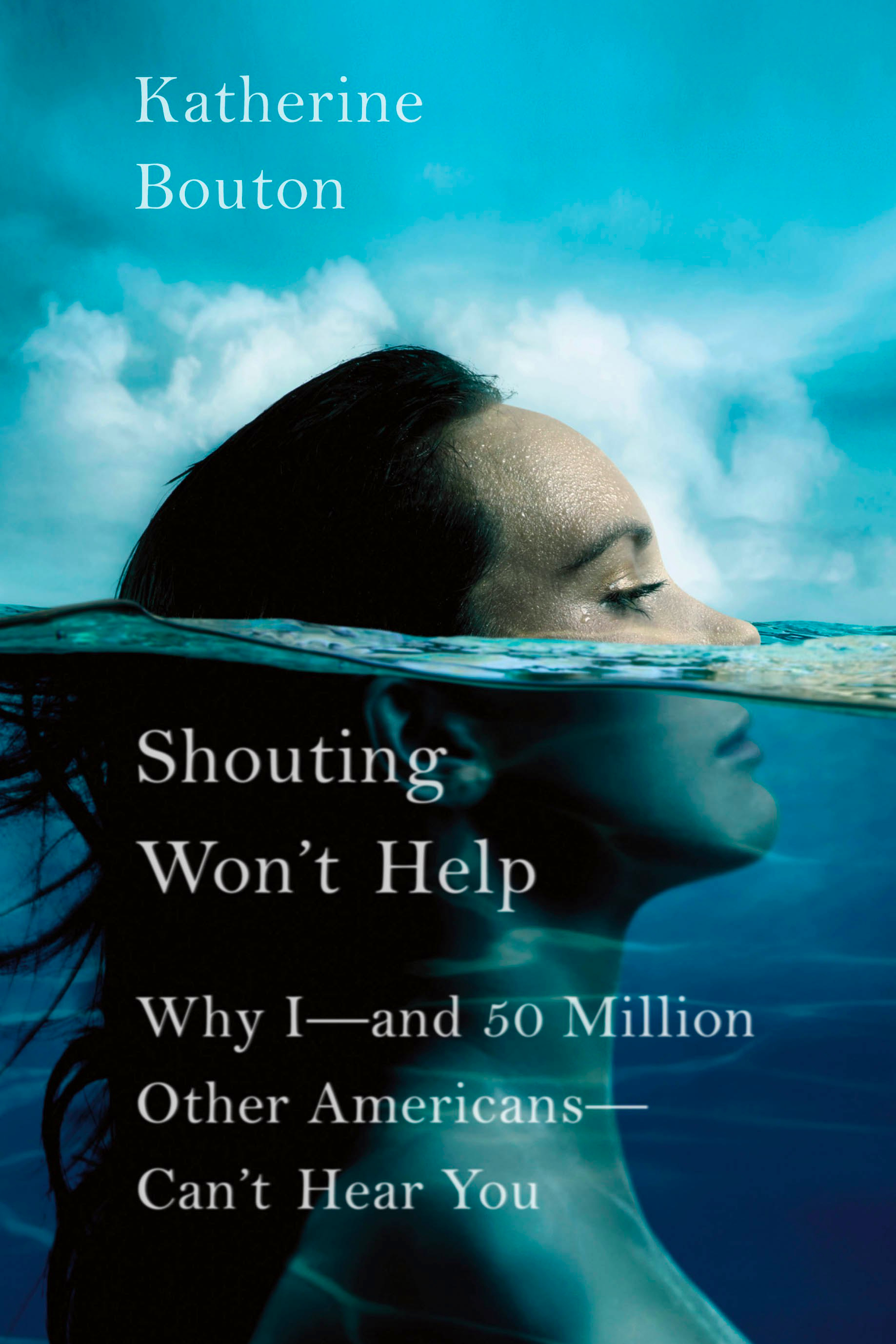
I’ve been open about my hearing loss ever since my first book was published 10 years ago. “Shouting Won’t Help: Why I and 50 Million Other Americans Can’t Hear You” was a memoir and it announced my theretofore secret hearing loss to the world. Years of shame and denial didn’t disappear in an instant. It was a learning process. But the more I talked about hearing loss, the easier it became.

I forget sometimes how hard it was to become honest. In a recent HLAA meeting (which I wrote about last month) people shared their challenges, especially those resulting from the pandemic and, specifically, masks. Maybe you’re so new to hearing loss that you don’t know about HLAA. In that case, here are some basics. (And then check out our chapter at hearinglossnyc.org.)
Start with friends and family, trying out your lines. Speak up when you can’t hear or understand. It’s easier to start gradually. “Sorry, what? I think I have wax in my ears.” When I was young enough not to be thought old, I’d use my hearing loss as a kind of flirtation, leaning in to the speaker to hear better while murmuring something about “not hearing that well.” I never used the term hearing loss!
Once you’ve taken that first step, move on….. “Mary! So great to see you. I can’t hear a thing today… my hearing is going.” Next time go a little further: “Mary, I left my hearing aid at home. I really want to talk to you. Can you email me?”
Soon you’ll discover how easy it is to start every conversation with the fact that you can’t hear. Many many people have some degree of hearing loss — one in five, in fact. So your statement makes you just one more of them.
Ask questions you’ll understand the answer to. Instead of: “Mary, hi! are you still writing for the magazine? [Yes? No?] Are you traveling? Doing field research? What? Oh, New York. Yes. Huh. Yes. Well, congratulations.”
Try: “Mary! I haven’t seen you in months. I’d love to talk but my hearing is getting pretty bad. I have hearing aids but you never know…. How are you? What are you doing these days? Can you email me? I’d love to hear about your work.”
And so on. Acknowledge who you are. Share your difficulties. People are surprisingly understanding, once you put yourself forward and say exactly where you’re coming from.
It’s a big step. Ease into it. But very soon, it will pay off.
Here’s the New York Times review: “The Sound of Silence,” by Seth Horowitz.
Discover more from Katherine Bouton: Smart Hearing
Subscribe to get the latest posts sent to your email.

 Katherine Bouton: Smart Hearing
Enjoyed reading your piece. What is a good reply to a “friend” when you ask what? And she replies do you have your hearing aids in? Are they turned on?
LikeLike
That’s incredibly rude. And I would probably say so. I see why you put “friend” in quotes. But if it really was a friend I’d still say that it was rude but offer to enlighten him or her about hearing loss and hearing aids and what they can and cannot do.
LikeLike
Well said, Katherine. Easing into telling people you have a hearing loss can make life a lot easier. Having a sense of humor helps, too. My favorite line is “ The number you have reached is temporarily disconnected.” That usually gets me a laugh , gives me an opportunity to explain that I have a profound hearing loss and ask that they make direct eye contact when they speak to me.
LikeLike
You always have the best responses right at hand!
LikeLike
Coming out of the hearing loss closet is indeed a challenge. Belonging to HLAA, and spending time with other people with hearing loss, has helped me deal with that challenge. I confess that I still occasionally pretend I’ve heard something that I didn’t hear, but now I’m more inclined to to tell people I have a hearing loss and ask them to face me when they talk to me.
LikeLike
It’s all part of the journey. Sounds like you’re getting there!
LikeLike